
Boxing can give you an incredible workout. But the part that keeps it interesting is realizing you are actually getting better at something.
Your punches get cleaner.
Your movement becomes more natural.
You start understanding distance, defense, and timing instead of guessing.
At Deep Water, Boxing is developed as a real skill inside our Striking program.
Train because you want to get in better shape, learn a new skill, feel more capable and better able to protect yourself, or eventually compete.
You do not need to know how far you want to take it before you begin.
Takes 30 seconds. No experience needed.
There are plenty of ways to make yourself tired.
Boxing gives all that work somewhere to go.
You still leave tired.
But now you also leave knowing you got better at something.
That is what makes Boxing more than another workout.
There is always another detail to sharpen.
Heavy bags are useful.
Pad work is useful.
Combinations are useful.
But they are tools.
You can work incredibly hard hitting a bag and still struggle when the problem in front of you starts moving.
That is why becoming better at Boxing requires more than learning punches and memorizing combinations.
The punches matter.
Everything that makes those punches work matters just as much.
Your hands can only do so much when your feet keep putting you in the wrong place.
Better footwork helps you move without crossing yourself up, reaching unnecessarily, crowding your own punches, or giving away your balance every time you attack.
When your position improves, your hands suddenly have more opportunities to work.
Knowing how to throw a punch does not help much when you are not close enough to land it.
You learn to recognize when you are too far away, too close, or exactly where you need to be.
You also begin understanding how changes in position and angle can create opportunities that were not available directly in front of you.
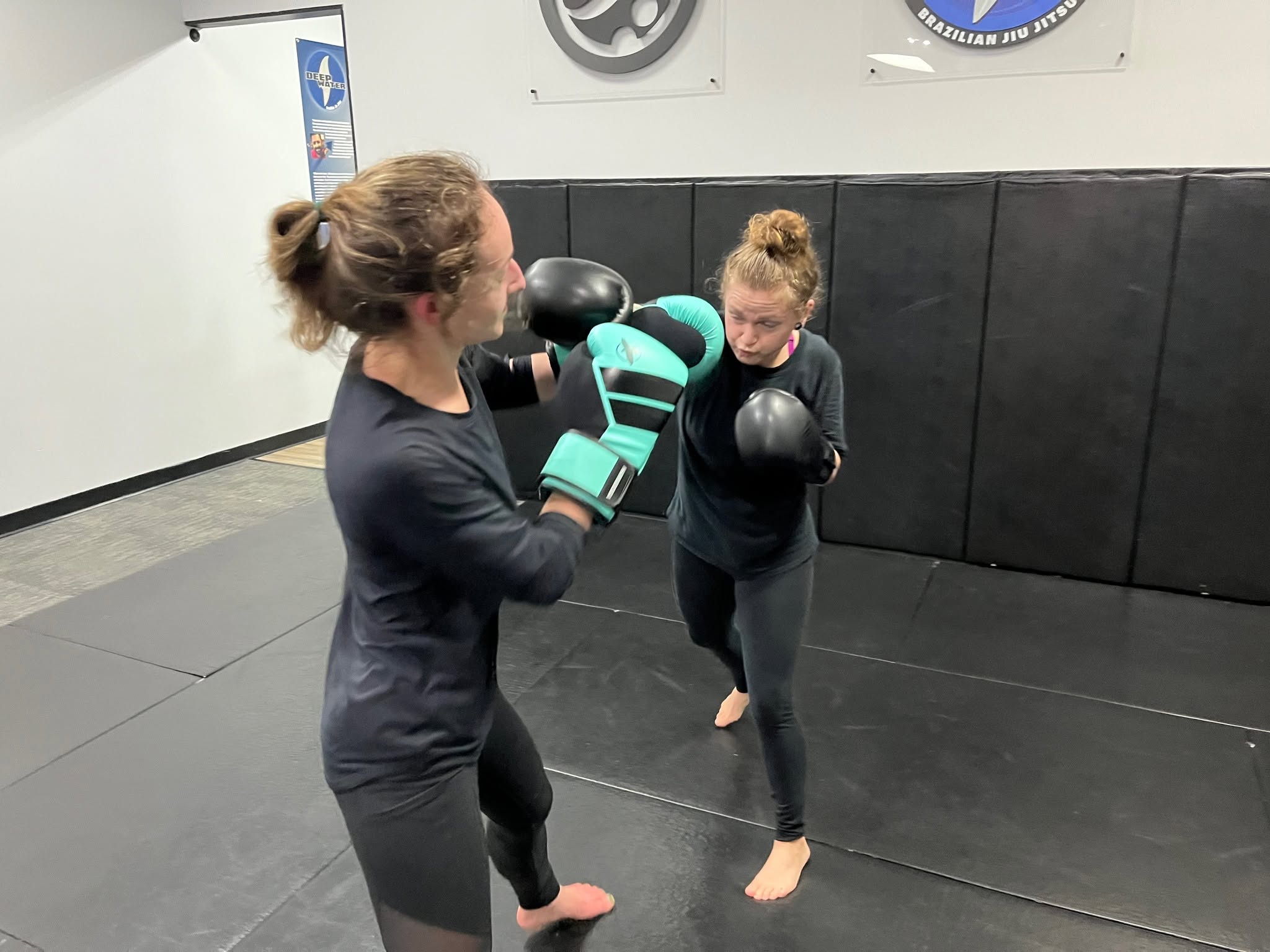
Trying harder is not the same as punching better.
Cleaner mechanics help your punches become sharper, more coordinated, and more efficient without relying on wild effort or unnecessary tension.
And the better your position becomes, the more accurately you can put those punches where you actually want them.
Good Boxing does not stop being defensive because you started attacking.
You learn to protect yourself before, during, and after your punches so throwing a combination does not automatically leave you exposed.
Eventually, the question stops being:
What punch do I know?
And starts becoming:
What is actually available right now?
The same punch can be a good decision one moment and the wrong decision a second later.
Learning to recognize that difference changes everything.
Learning combinations matters.
They help develop coordination, mechanics, rhythm, and the ability to connect one punch to another.
But remembering jab-cross-hook is different from understanding why those punches belong together in a particular moment.
As your Boxing develops, you begin paying attention to what your actions create.
That is when Boxing becomes much more interesting.
You stop thinking only about the combination you were told to throw.
You start noticing what is happening in front of you.
Then you begin making decisions because of it.
You are beginning to understand it.
Boxing can push your conditioning.
You move.
You punch.
You defend.
You reset.
You react.
You make decisions while your heart rate is up and your body is getting tired.
That is a demanding way to train.
But the payoff is bigger than the calories you burned that day.
Eventually, mechanics alone are not enough.
And you need coaches who can see what is happening and help you adjust.
That is an important part of our CAP Striking classes.
CAP stands for Combat Athlete Program, but the room is not reserved for people preparing for fights.
CAP Striking operates more like a traditional Boxing and Muay Thai training room than a one-size-fits-all advanced class.
Students can be working on the same underlying problem while using different tools to solve it.
One athlete may be working through that problem primarily with Boxing. Another may be using Muay Thai. Someone else may be developing both.
The coaches adapt the training, constraints, and feedback so each athlete can work on the problem in a way that fits what they are developing.
That means people can share the same room without everyone needing the exact same skill set or the exact same goal.
Some primarily want fitness, challenge, practical skill, and years of continued improvement.
Some are preparing to compete.
Our coaches work across the room rather than treating recreational students as background while attention goes exclusively to a small group of fighters.
Your training can become more demanding and more individualized as your ability develops.
If you are working toward competition, that same foundation can support more specific preparation involving strategy, game planning, harder sparring, fight conditioning, and the demands of the opponent and event ahead.
If you never want to compete, you can still keep becoming a better Boxer.
Different goals do not require different standards for learning the skill well.
Takes 30 seconds. No experience needed.
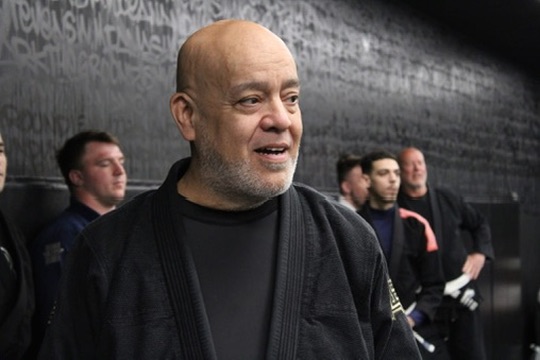
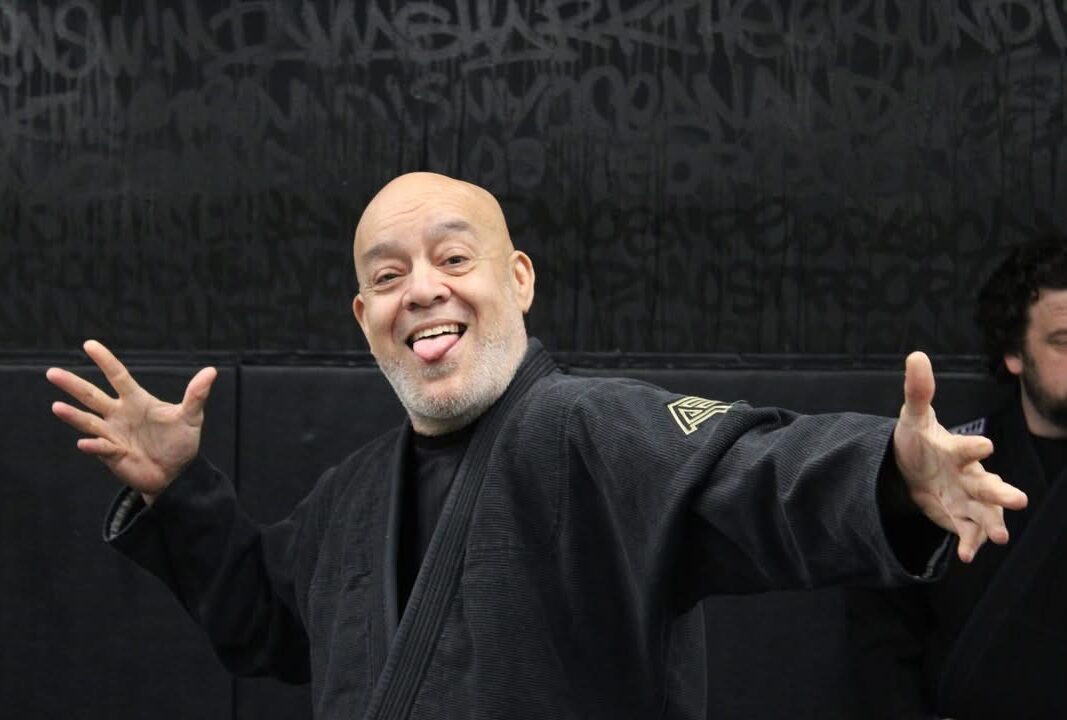
Coach Ray was part of Deep Water from the beginning.
He first came to us as a Brazilian Jiu-Jitsu student and soon became an important part of our Boxing program, sharing the experience he had built through years of training.
While continuing his own Jiu-Jitsu journey, Ray coached Boxing at Deep Water and eventually earned his Brazilian Jiu-Jitsu purple belt.
Boxing had been part of Ray’s life long before Deep Water.
He started training at 13, won Golden Gloves in 1987, and trained at Joe Frazier’s gym before eventually bringing his experience and love for martial arts into coaching others.
Those accomplishments tell you something about his experience.
They are not the reason he meant so much to us.
Ray was family.
He brought humor, warmth, curiosity, toughness, and a genuine love for the people around him.
He cared about his students, loved martial arts, and represented so much of what we believe Deep Water should be.
Coach Ray passed away on October 1, 2025.
We miss him deeply.
And every time Boxing is taught inside this academy, there is a piece of what Coach Ray helped build still here with us.
There is one thing we want to make completely clear.
Deep Water develops Boxing, but we do not currently operate a separate beginner Boxing class.
Complete beginners interested in Boxing begin with Striking Intro.
You are not putting Boxing on hold. You are starting with the skills it depends on.
The stance, movement, balance, defense, mechanics, power control, timing, and awareness you begin developing are the foundation your Boxing builds on.
As your skills, control, and training habits develop, your coaches can guide you into CAP Striking when you’re ready, where your Boxing continues to develop in a more dynamic training environment.
If Boxing is the reason you contacted us, tell us.
That matters.
We want to understand what drew you to training and what skills you’d like to develop over time.
Already have Boxing or striking experience?
Tell us about your background when you contact us.
The standard Striking Intro pathway is for complete beginners, and previous experience may affect where it makes sense for you to begin.
Maybe you want to get in better shape.
Maybe you want to feel sharper, more coordinated, and more capable.
Maybe you want legitimate striking skills and greater confidence in your ability to protect yourself.
Maybe Boxing has simply always looked like something you would enjoy learning.
Or maybe you do not know yet how far you will want to take it.
You do not need a competition goal.
You do not need previous experience.
You do not need to know whether Boxing will become a hobby you love, a way to stay in shape, a skill you keep developing for years, or something you eventually decide to test in competition.
Get a workout.
Learn something.
See how it feels when the movements start to click and you can tell the work is paying off.
Tell us Boxing is what brought you here.
We will help you take the right first step.
Takes 30 seconds. No experience needed.

Deep Water Brazilian Jiu Jitsu
Ready to Start Training?
Takes 30 seconds. No experience needed.
© 2026 Deep Water Brazilian Jiu Jitsu. All rights reserved.