
Muay Thai gives you a lot to work with.
Punches. Kicks. Knees. Elbows as your training develops. Clinch work as you become ready for it.
You get a hard workout, but you are also learning how to actually use those tools together.
That combination is what keeps Muay Thai interesting. You are getting fitter, becoming more coordinated, learning how to strike, and always finding another part of the skill to improve.
You do not have to want to fight to have a good reason to train.
Takes 30 seconds. No experience needed.
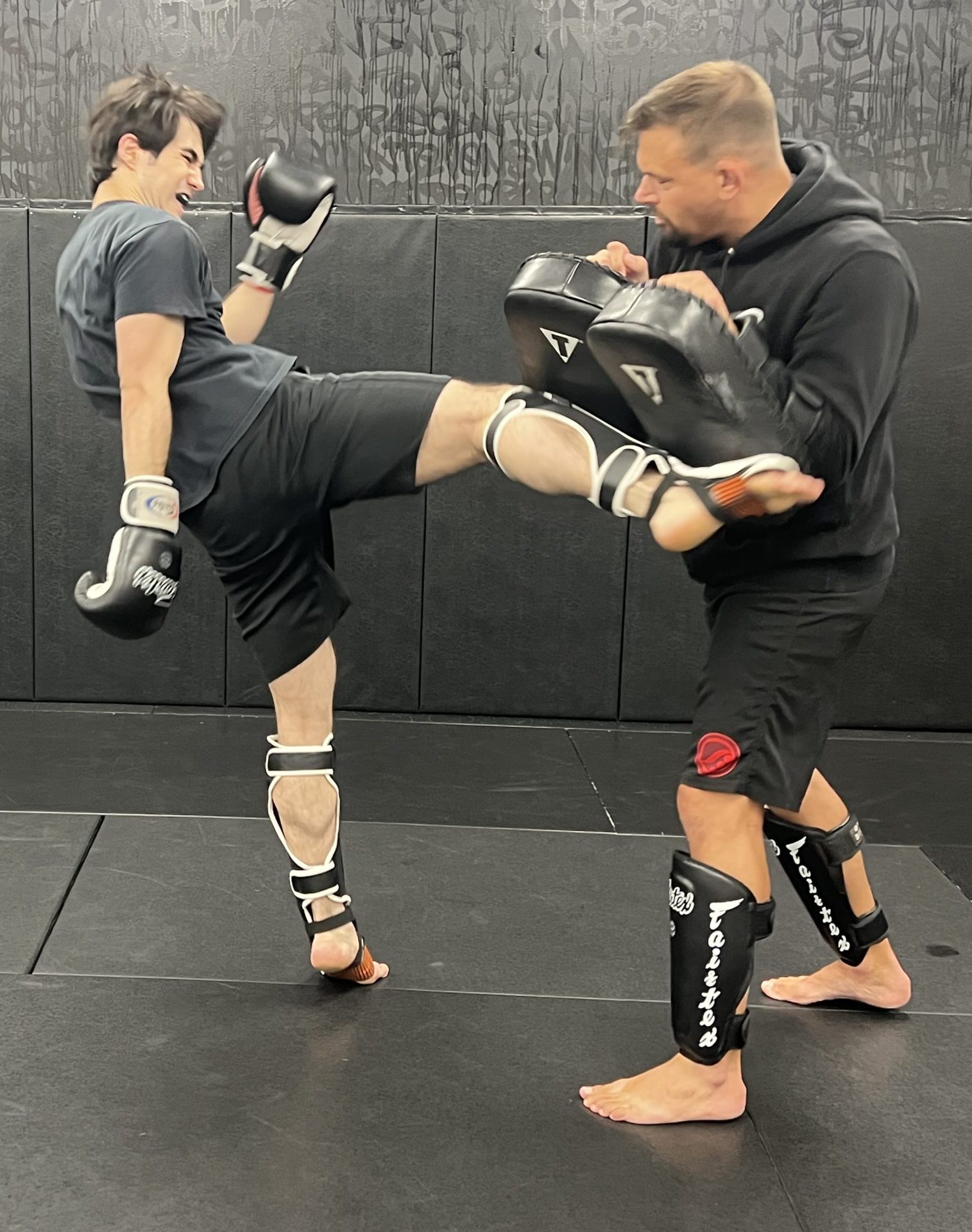
When you're new, you're usually thinking about one thing at a time.
Maybe it's getting the kick right. Maybe it's moving without getting too close. Maybe it's remembering your defense.
Then, little by little, those things start to connect.
A punch can set up a kick. A kick can change the distance. Closing that distance can bring knees and clinch work into the picture.
The way somebody reacts can change what makes sense next.
That is where Muay Thai gets interesting.
You stop thinking only about individual techniques and start learning how different attacks, defenses, and ranges affect each other.
And because there are so many pieces to work on, you can train for years without feeling like you have reached the end of it.
Boxing goes incredibly deep into punching, footwork, angles, defense, distance, and everything that happens around the hands.
Muay Thai adds more ways to strike and more ranges to deal with. Kicks change the distance. Knees matter when you get closer. Clinch work adds a completely different part of the game. Elbows can become part of the training as your experience develops.
Neither one is simply the harder or easier version of the other.
They are different skills with different problems to figure out.
You’re moving your feet, punching, kicking, defending, changing distance, and trying to keep your technique together as you get tired.
That makes Muay Thai physically demanding pretty quickly.
But you’re not just moving for the sake of burning calories.
You’re learning how to use your whole body to strike, how to recover after you attack, how to defend while someone is moving in front of you, and how to keep making good decisions when you’re tired.
So yes, you’ll get a workout. You’ll also leave with something you can actually get better at.
It’s one thing to learn how to throw a punch, a kick, or a knee on its own.
It’s another to understand when it makes sense, how to stay protected while you use it, and what to do when the first strike doesn’t end the exchange.
That’s where Muay Thai starts becoming something you can actually use instead of a collection of techniques you practiced in class.
USE THE RIGHT TOOL
Learn What Works From Different Distances
A punch, kick, knee, or clinch entry only works if the distance makes sense for it.
STAY PROTECTED
Learn to Attack Without Leaving Yourself Open
You still have to protect yourself while you attack and stay ready for whatever comes back.
BE READY FOR WHAT’S NEXT
Learn to Stay Ready After You Strike
You still need to recover after the strike, stay protected, and be ready to move or attack again.
That's the difference between knowing more techniques and getting better at Muay Thai.
STARTING MUAY THAI
Deep Water does not currently run a separate beginner-only Muay Thai class.
Complete beginners who come to us for Muay Thai start in Striking Intro.
That’s where you learn how to stand, move, punch, kick, defend, work with a partner, and control your power before the training gets more complicated.
You are already learning skills that belong in Muay Thai.
HOW YOUR TRAINING BUILDS
You just are not being asked to deal with every part of Muay Thai on your first day.
As you improve, the training can include more combinations, more partner work, more changes in distance, knees, clinch work, elbows when appropriate, and more situations where the person in front of you is reacting instead of simply holding a target.
You will not be thrown straight into hard sparring because you said you wanted to learn Muay Thai.
You also do not need to get in shape before starting.
Training will help with that.
Your job at the beginning is to learn.
Already have experience in Muay Thai, Boxing, kickboxing, or another striking art?
Let us know. Depending on your background, our coaches may recommend a different starting point.
Takes 30 seconds. No experience needed.
A lot of people are interested in Muay Thai because they want the workout, the challenge, and the skill without ever stepping into a ring.
That is a completely legitimate reason to train.
You can spend years getting better at your kicks, punches, defense, movement, knees, clinch work, and everything that connects them without ever having a fight.
Training seriously and competing are not the same thing.
CAP STRIKING
Where you learn to make your Muay Thai work when the other person is reacting.
As your foundation and training habits develop, you may progress into CAP Striking, the more reactive next stage of Deep Water’s Striking training.
CAP is not a fighter-only class.
People in the room may have different experience levels, different goals, and even different striking styles they are trying to develop.
Several students might be working on the same underlying problem while one uses mostly Boxing, another works more with Muay Thai, and another uses both.
If Muay Thai is your focus, the coaching can account for the things you need to develop: kicks, knees, changes in distance, clinch work as you become ready for it, defense, and staying effective as the training becomes less predictable.
The coaches adjust the work and feedback to what you are actually trying to improve.
Serious coaching isn’t reserved for people getting ready to fight.
No martial art can guarantee what will happen in a real confrontation.
Training can give you practical skills that still matter outside the gym.
You spend time learning how to strike with coordination.
You learn how distance changes what you can and cannot do.
You practice defending while another person is moving in front of you.
You get more comfortable making decisions when there is physical pressure instead of everything happening exactly the way you expected.
And over time, you get a much better understanding of what your body can actually do.
That gives you a much better basis for confidence than simply hoping you'll know what to do if you ever need to.
Competition is there for students who want it.
But we do not build the whole Muay Thai program around the assumption that everyone does.
If you eventually decide you want to compete, the work you have already done matters.
You still need your fundamentals.
You still need good defense.
You still need to know where you are, what is available, and how to make good decisions when you are tired and the other person is putting pressure on you.
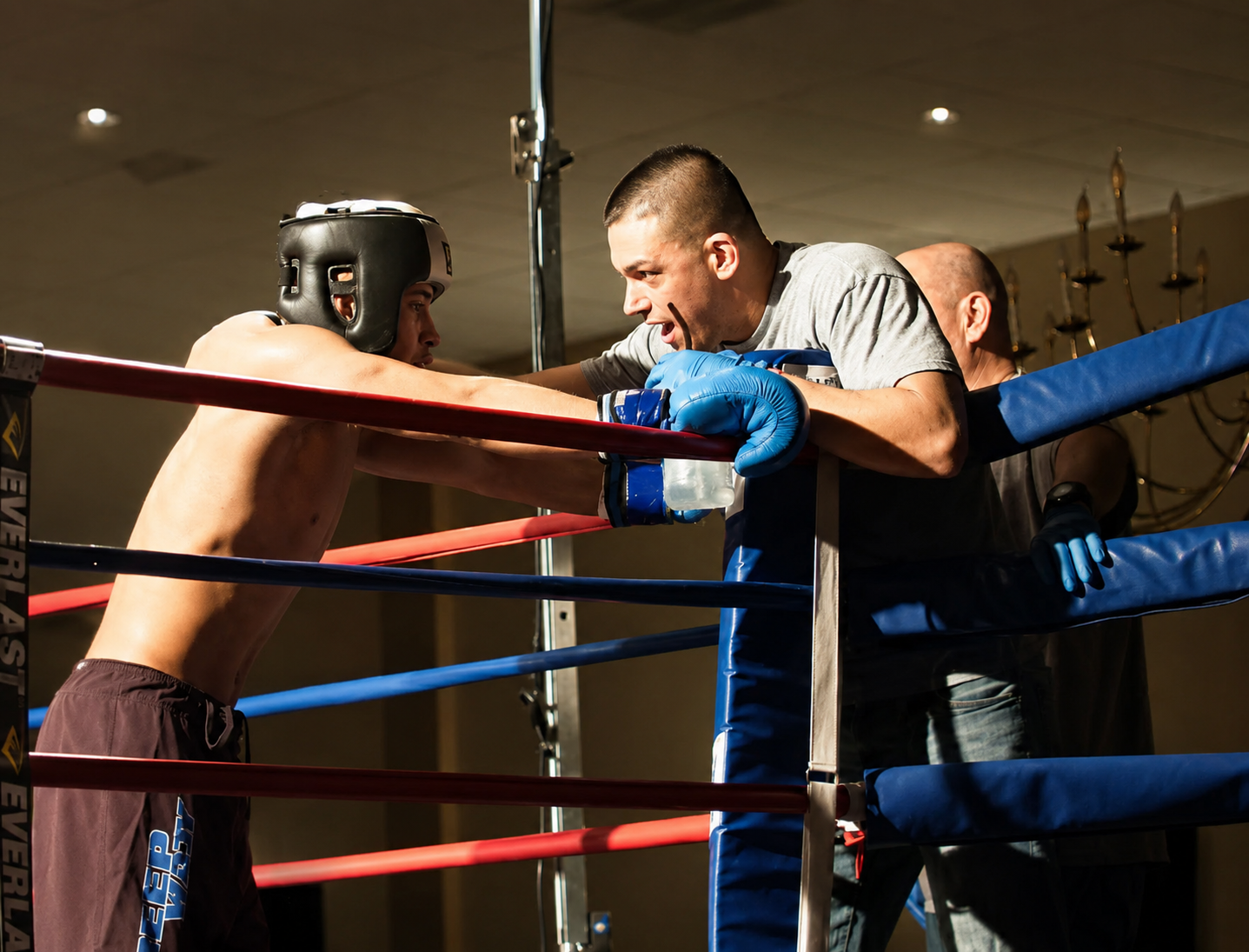
WHEN COMPETITION BECOMES THE GOAL
From there, preparation can become more specific.
You do not need any of that on day one. But it matters that the training has somewhere to go if competition becomes your goal.
You do not need to know whether you want to train for six months or six years.
You do not need to decide whether you will ever spar hard or compete.
And you do not need to get yourself “ready” before coming in.
Tell us Muay Thai is what brought you in.
You’ll start in Striking Intro, meet the coaches, and begin working on the punches, kicks, movement, defense, and control your Muay Thai training will build from.
Then decide whether you want to keep going.
Takes 30 seconds. No experience needed.
Deep Water Brazilian Jiu Jitsu
Ready to Start Training?
Takes 30 seconds. No experience needed.
© 2026 Deep Water Brazilian Jiu Jitsu. All rights reserved.