
MMA Training in Harrisburg Where Striking and Grappling Come Together
MMA is where striking, takedowns, grappling, defense, and control stop being separate skills.
You learn how one changes the next, what becomes possible as the situation changes, and how to put the pieces together into a more complete martial arts skill set.
If MMA is what interests you, you can start working toward it even if you have never trained before.
No MMA experience needed.
We’ll help you begin with the right foundation.
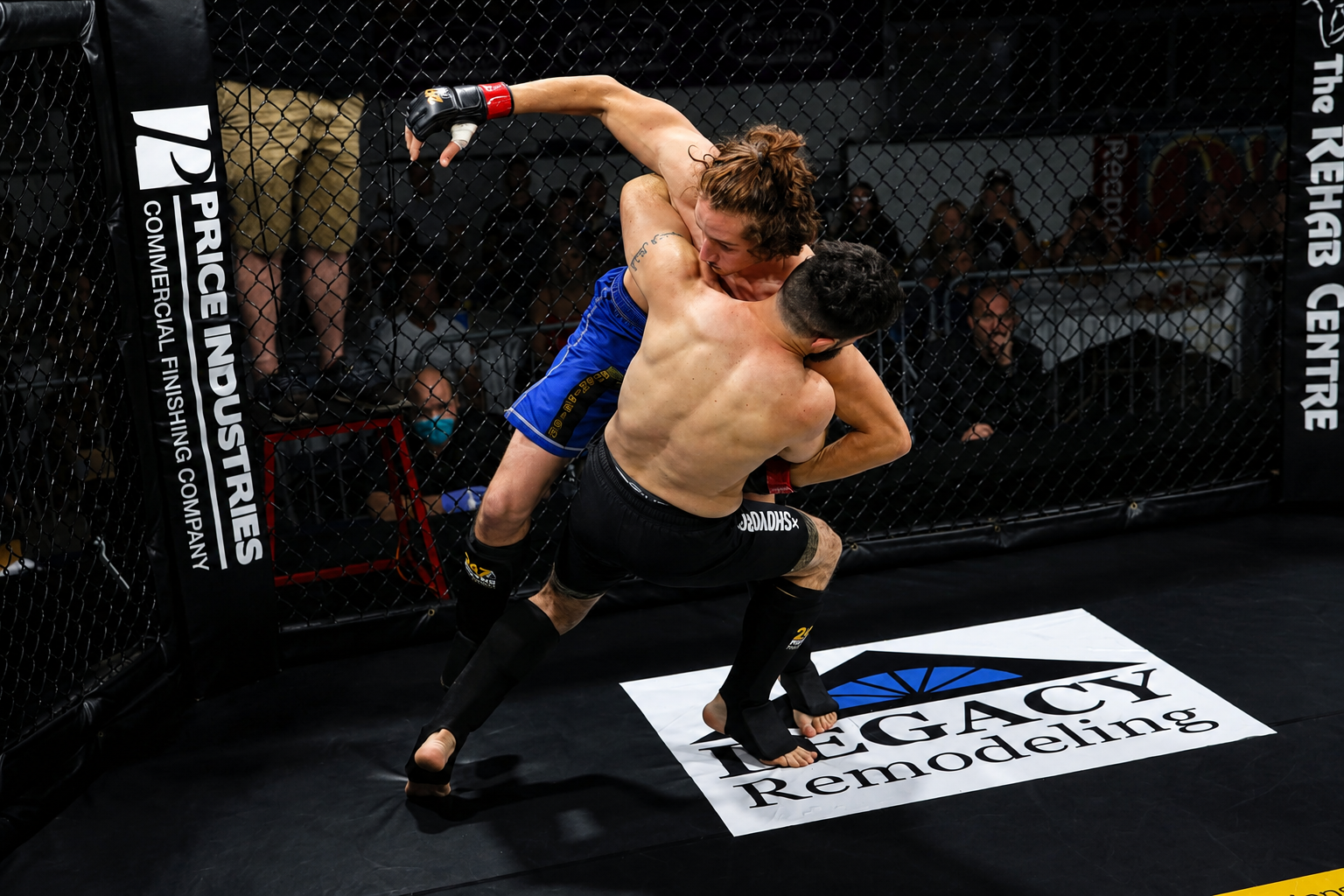
In MMA, Every Skill Changes the Others
MMA changes what each skill has to account for.
A takedown can end one problem and immediately create another. A position that works well in Brazilian Jiu-Jitsu may need to change when strikes are involved. Getting pushed against a wall or cage changes how you move, defend, escape, strike, and attack takedowns.
That is the problem MMA teaches you to solve.
You are no longer dealing with one part of martial arts at a time.
The real skill is learning to make it all work together.
MMA Works Better When the Foundations Are Already There
Trying to learn striking, takedowns, grappling, ground positions, wall work, defense, and MMA sparring all at the same time can leave you trying to solve too many new problems at once.
That is why we build the Brazilian Jiu-Jitsu and Striking foundations first.
BRAZILIAN JIU-JITSU
Learn to control what happens when the fight reaches the ground.
Brazilian Jiu-Jitsu develops your ability to control positions, defend, escape, work from the ground, and deal with someone who is actively trying to stop you.
STRIKING
Learn to attack and defend while the fight is still standing.
Striking develops the movement, balance, mechanics, distance, defense, and control you need to hit effectively without leaving yourself exposed.
Neither one becomes MMA on its own.
Once you can actually use both, the questions start to change.
Should you strike? Should you grapple?
Which one makes sense when both are part of the fight?
This Is Where the Separate Skills Start Becoming MMA
Once your Brazilian Jiu-Jitsu and Striking are solid enough to use, MMA training starts connecting them in situations that neither discipline has to solve in quite the same way on its own.
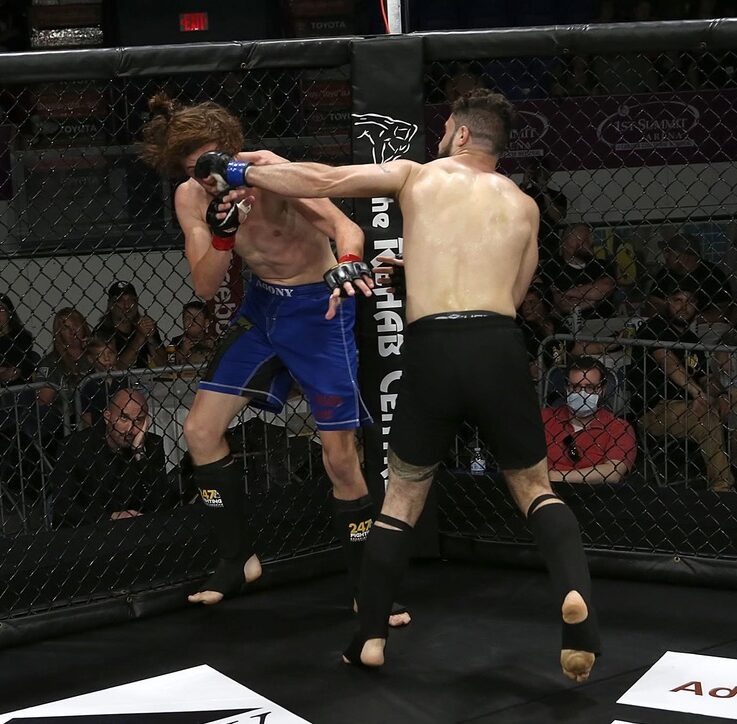
STANDING + TAKEDOWNS
Standing Doesn’t Always Stay Standing
You learn to strike while a takedown is possible, close distance without forgetting about the strikes, and deal with an exchange that can change from one to the other in seconds.
GROUND + STRIKES
The Ground Changes When Punches Are Involved
Positions, control, defense, escapes, and getting back to your feet all have to account for strikes as well as grappling.
WALL + CAGE
The Wall Changes Your Options
Against a wall or cage, you cannot move the same way you can in open space. Takedowns, escapes, control, striking, and getting back to your feet all have to adjust.
The Goal Is to Be Capable Wherever the Fight Goes
You are not just adding more techniques. You are building more ways to deal with what is happening in front of you.
If the exchange stays standing, you have striking skills to work with. If someone closes the distance, takedowns and control become part of the answer. If it reaches the ground, you have grappling skills. If the wall changes how you can move, you learn how to work there too.
The value of MMA is that you are less dependent on the situation staying in the part of martial arts you are most comfortable with.
The point is to have an answer wherever the fight goes.
No MMA experience needed. We’ll help you begin with the right foundation.
You Learn to Put MMA Together Before You Have to Use All of It at Once
Once you’re ready to begin MMA, the goal isn’t to throw every possibility at you at once. You start with specific situations where you can learn how striking, takedowns, grappling, and the cage connect.
As those connections become more familiar, the training opens up.
The point isn’t to throw you into MMA and hope it comes together. It’s to teach you how to put it together.
You Don’t Need to Be Great at Everything. You Need Enough to Build On.
There is no fixed timeline for when someone begins MMA training.
What matters is whether you have enough understanding, control, defense, and usable skill in Brazilian Jiu-Jitsu and Striking for MMA training to start adding something new.
You do not need to know everything first.
You need enough of the foundations so the training can focus on connecting them rather than teaching every basic skill from scratch.
What coaches need to see is pretty straightforward:
You can use the fundamentals you’ve been taught.
You are beginning to apply your BJJ and Striking instead of only recognizing the techniques during practice.
Your defense holds up as more gets added
Your defense and control are solid enough that adding more things doesn’t make everything fall apart.
You can work responsibly with another person.
You can control your intensity, follow coaching, and train in a way that allows both people to keep learning.
You can handle more things happening at once.
Strikes, takedowns, grappling, walls, and transitions can begin interacting without every part of the exchange being completely new.
Learning MMA and Taking a Fight Are Two Different Goals
There is a lot to learn in MMA before competition ever needs to enter the conversation.
Learning how strikes affect takedowns, how grappling changes when punches are involved, how the wall changes your options, and how all of those situations connect is a worthwhile challenge on its own.
You can want to become good at that without needing a fight to prove anything.
A fight can be a goal later. Learning MMA can be the goal now.
You Can Start From Scratch With MMA as the Goal
No MMA experience is required to begin working toward it.
If you are completely new, you begin with the Brazilian Jiu-Jitsu or Striking foundation that makes the most sense for you. From there, you keep building the skills MMA depends on.
Tell us MMA is what brought you in. We will help you figure out which foundation makes the most sense to begin with based on your experience and what you want to develop.
Already have BJJ, Striking, wrestling, or other martial arts experience? Tell us when you contact us. Your background may change where it makes sense to begin.
You do not need MMA experience before you contact us.
You do not need to already know how to strike or grapple.
You just need to know MMA is where you want your training to go.
Tell us MMA is the goal when you book your trial. We’ll help you start with the foundation that makes sense for you.
No MMA experience needed. We’ll help you begin with the right foundation.